
Equity benchmark Sensex rallied 936 points on Monday, helped by heavy buying in banking and IT counters along with decline in oil prices amid hopes of headway in renewed diplomatic talks between Russia and Ukraine. A fresh round of talks is expected on Monday between Ukrainian and Russian officials. Rising for the fifth straight session, the BSE Sensex jumped 935.72 points or 1.68 per cent to settle at 56,486.02.

Of the 15 car manufacturing companies in India, eight have a market share of below 2 per cent, raising questions about their long-term future in a competitive market that has already seen Ford Motors and General Motors slam the door on India.

The driver told the police that he was not aware that the body was stuck under the car and attributed it to poor visibility caused by dense fog.

The board of Maruti Suzuki India (MSIL) on Tuesday approved a proposal to issue shares worth Rs 12,841 crore to parent company Suzuki Motor Corporation (SMC) for acquiring Suzuki Motor Gujarat (SMG). The Gujarat manufacturing plant - with an annual capacity of 750,000 units - is owned by SMG, a wholly-owned subsidiary of SMC. The shares issued to SMC will raise its ownership in MSIL from 56.48 per cent to 58.19 per cent--India's largest carmaker stated in a notice to BSE.

Consumer goods firms and auto companies are witnessing an upturn in rural demand, which had been lagging for most of FY24. Expectations of a bumper rabi crop harvest have helped turn the tide. The Reserve Bank of India's (RBI's) Monetary Policy Committee kept the repo rate unchanged last week, noting that as rural demand catches up, consumption is expected to support economic growth in 2024-25.

Apart from physical stores, the company operates 2,700 digital touch points in the form of web pages, which is gaining good traction from tier-II and III centres.

At a time when exchange-traded funds (ETFs) were unloading Jio Financial Services from their portfolios, some active fund managers were placing large bets on the demerged financial services arm of Reliance Industries Ltd (RIL), a report by Nuvama Alternative & Quantitative Research shows. Motilal Oswal Mutual Fund and Quant Mutual Fund were the top MF buyers of the stock in August. They bought around 60 million shares each, together investing around Rs 2,800 crore.
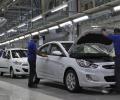
Domestic passenger vehicle (PV) sales saw a significant growth in October due to increased availability of semiconductor chips and rising consumer confidence. The sales figures during the month - which coincided with the first post-Covid festival season - released by the top ten carmakers saw a jump of 30.7 per cent to 322,885 units in October. Auto companies count wholesales - units dispatched to dealers - as sales.
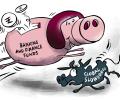
Even as banks and finance companies are reporting record-high earnings, their weighting in the benchmark National Stock Exchange Nifty50 Index has seen a downward trajectory. Investors expect a stronger performance from other sectors in the new year. Currently, banking, financial services and insurance (BFSI) companies collectively hold a weighting of 34.5 per cent, down from 36.7 per cent at the end of December 2022 and a record high of 40.6 per cent at the end of December 2019. This represents the sector's lowest weighting in the index since December 2021 when it stood at 33.7 per cent.

Major carmakers, including Maruti Suzuki, Hyundai, Tata Motors on Friday reported growth in their passenger vehicle sales in June as semiconductor shortage woes showed gradual signs of easing out. Other manufacturers, Kia India, MG Motor India and Skoda Auto India also reported robust sales growth last month. Maruti Suzuki India (MSI) reported 5.7 per cent increase in total wholesales at 1,55,857 units in June as compared to 1,47,368 units to dealers in June 2021.

If Tesla comes in, India's position as a manufacturing hub will rise many notches, as it will become only the second country, after China, to have both Apple as well as Tesla.
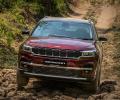
The iconic brand is considering petrol powertrains for its entire Indian portfolio, which includes the Jeep Compass, Meridian, Grand Cherokee and Wrangler.

The country's largest carmaker Maruti Suzuki India is neither shifting investments nor jobs from Haryana to Gujarat by shifting production of its compact sedan Dzire, company chairman RC Bhargava said on Tuesday. The company is maximising the efficiency of production at its two plants at Haryana and the parent Suzuki's Gujarat plant, keeping in mind the demand of its multiple models.

Passenger vehicle exports from India increased 43 per cent in FY22, with Maruti Suzuki India leading the segment with dispatches of over 2.3 lakh units, as per the latest data by industry body SIAM. The total passenger vehicle (PV) exports stood at 5,77,875 units in 2021-22 fiscal, as compared to 4,04,397 units in 2020-21. Passenger car shipments saw 42 per cent growth at 3,74,986 units, while utility vehicle exports rose 46 per cent at 2,01,036 units during the last fiscal, the data by the Society of Indian Automobile Manufacturers (SIAM) showed.
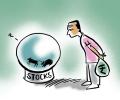
RBI's interest rate decision, macroeconomic data and global trends would dictate terms in the equity market in a holiday-shortened week, analysts said. Besides, the focus will also be on foreign portfolio investors' trading activity, they added. Equity markets will remain closed on Tuesday for 'Mahavir Jayanti' and on Friday on account of 'Good Friday'.
Domestic passenger vehicle sales could touch a record level of nearly 40 lakh units this year on strong demand and companies finding ways to enhance production despite semiconductor shortage, a senior Maruti Suzuki India official said on Monday. Even as the chip shortage issue has improved compared to a year back, the industry is estimated to have a pending order of around 7.5 lakh units of passenger vehicles with Maruti Suzuki India (MSI) alone having around 4.18 lakh units, company senior executive officer, marketing and sales, Shashank Srivastava told PTI. "I think it would be slightly below 4 million (units mark).

The 2024 Kia Sonet facelift impresses with its comprehensive upgrades, ranging from a refreshed exterior design to advanced safety and technological features.

Equity benchmarks ended higher on Friday helped by buying in index major Reliance Industries along with fresh foreign fund inflows. Extending its previous day's rally, the 30-share BSE benchmark climbed 203.01 points or 0.34 per cent to settle at 59,959.85. During the day, it jumped 376.33 points or 0.62 per cent to 60,133.17.

Appellate tribunal NCLAT on Monday stayed the Rs 200 crore penalty imposed by the Competition Commission on Maruti Suzuki but directed the car maker to deposit 10 per cent of the total amount within three weeks. The amount has to be deposited with the Registrar of the National Company Law Appellate Tribunal (NCLAT). A three-member NCLAT bench stayed the demand notice issued on October 27 to the car maker, subject to the condition of depositing 10 per cent of the penalty amount.

Developed at an investment of Rs 620 crore (Rs 6.2 billion), the most on a car by Maruti Suzuki, the Ciaz will also be exported to West Asia, Europe, Africa and Latin America.

Toyota Kirloskar Motor on Tuesday said it is recalling around 994 units of its recently launched mid-sized sports utility vehicle Urban Cruiser Hyryder to fix a faulty seat belt part. In a statement, the company said it has initiated a voluntary recall campaign for certain Urban Cruiser Hyryder units to investigate for a possible issue with front seat belt shoulder height adjuster plate assembly. Around 994 vehicles of the specified models may have been impacted by this concern, Toyota Kirloskar Motor (TKM) said in a statement.

The new year will see a line of hatchbacks (including compact SUVs) hit the Indian roads. Rajesh Karkera/Rediff.com offers a peek.

'From data on enquiries, we can build what we call a data lake or a data warehouse where data is classified into various cohorts and then we use AI and ML tools to predict demand down the line.'

Hyundai got two stars for Grand i10 Nios and Kia got three stars for Seltos.

Leading automakers Maruti Suzuki India, Hyundai and Tata Motors reported a double-digit increase in dispatches to dealers in April as the demand remained robust especially for the sports utility vehicles. The country's largest car maker Maruti Suzuki India (MSI) said its domestic passenger vehicle wholesales rose 13 per cent to 137,320 units last month as against 121,995 units in April 2022. Sales of mini cars, comprising Alto and S-Presso, fell 18 per cent to 14,110 units as compared with 17,137 units a year ago.

Maruti Suzuki India is eyeing a leadership position in the SUV segment as it continues to add new products across various sub segments, a top company official said on Wednesday. The country's largest carmaker has bolstered its presence in the high volume entry and mid level SUV segments with new Brezza and all new model -- Grand Vitara. "In every segment except SUV, we are the market leader by a distance. "It is only in the SUV that we are behind, so we need to catch up. Clearly, we have to become number one in the SUV space also," Maruti Suzuki India MD and CEO Hisashi Takeuchi said in an interaction on the sidelines of the global unveiling of Grand Vitara.

A clutch of automakers including Maruti Suzuki, Hero MotoCorp, Mercedes Benz India, Eicher Motors, TVS Motor, and Isuzu Motors India announced they had got the clearance from the governments of the states they operate in to resume operations.

High cost of acquisition due to a variety of reasons, including higher GST than all other major countries, is slowing down car demand in the country and unless the Centre and states take steps to reduce it, the industry is unlikely to experience reasonable growth, according to Maruti Suzuki India Chairman R C Bhargava. Addressing shareholders in the company's Annual Report for 2020-21, he said after the devastating second wave of the coronavirus pandemic hitting the first quarter of FY22, the performance in the next three quarters will largely depend on how effectively people get vaccinated and observe safety protocols.

Suzuki chief Osamu Suzuki, on a visit to India, said that the companies would not only expand operations and production in the domestic market but gradually use it as a base for exports to other regions, primarily Europe.
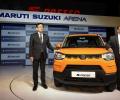
The new model, which is based on the company's fifth generation HEARTECT platform, comes with a BS-VI compliant one-litre petrol engine with a claimed fuel efficiency of 21.7 km per litre.

MSI will inspect certain WagonR models for a possible issue of fuel hose fouling with metal clamp.

Only five of India's top 20 car models have seen a reduction in wait times over the past year.

Investors' wealth climbed Rs 3.20 lakh crore as markets staged a smart comeback on Wednesday after falling in the last eight trading sessions. The BSE Sensex rallied 448.96 points or 0.76 per cent to settle at 59,411.08. During the day, it jumped 513.33 points or 0.87 per cent to 59,475.45.

Maruti Suzukisaid it was trying to offer more factory-fitted CNG cars to address environmental concerns

The company, whose arm Maruti Suzuki is the largest passenger vehicles maker in India, asserted that it does not align with any political or religious inclination in any part of the world.
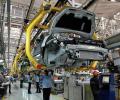
The K-shaped economic recovery in India from the pandemic slowdown shows in corporate results as well. The automobile sector, which represents big-ticket consumption, continues to do well and has increased its share in corporate revenues and profits while fast-moving consumer goods (FMCG) companies that sell low-ticket consumer goods are struggling with poor sales and earnings growth. The share of the automobile sector, including makers of auto ancillaries, in corporate net sales rose to a 10-quarter high of 10.05 per cent during July-September 2023 (Q2FY24) from 8.94 per cent a year earlier and 9.75 per cent in Q1FY24.

A new era of Indian equity market outperformance compared to China "appears to be dawning", according to Morgan Stanley. The firm has upgraded India to overweight in its Asia Pacific-excluding Japan (APxJ) list, making it their most preferred market not only in the region but also in the global emerging market (GEM) pack. India now holds the top position in this category, with an overweight of 75 basis points, a significant increase from nil previously.

With sentiment for the automotive (auto) sector turning positive, stocks of two-wheeler auto majors have been hitting their 52-week highs. Hero MotoCorp, Bajaj Auto, TVS Motor Company, and Eicher Motors recently reached their yearly highs on strong sales in the festival season and the expectation of faster growth rates ahead. Since the start of this month, listed two-wheeler majors have delivered returns in the 12-17 per cent range, compared to the 7 per cent gains for the S&P BSE Auto Index and 3 per cent for the benchmark S&P BSE Sensex.

Indian automakers dispatched nearly 2.92 lakh passenger vehicles, the highest ever for February so far, driven by strong demand for cars and utility vehicles, industry body SIAM said on Friday. The total passenger vehicle dispatches from companies to dealers last month increased 11 per cent to 2,91,928 units from 2,62,984 units in February 2022. Passenger car sales rose to 1,42,201 units in February against 1,33,572 units in the year-ago period.

The e-SURVIVOR symbolises Maruti Suzuki's commitment to help develop the entire life cycle of EVs in India
